


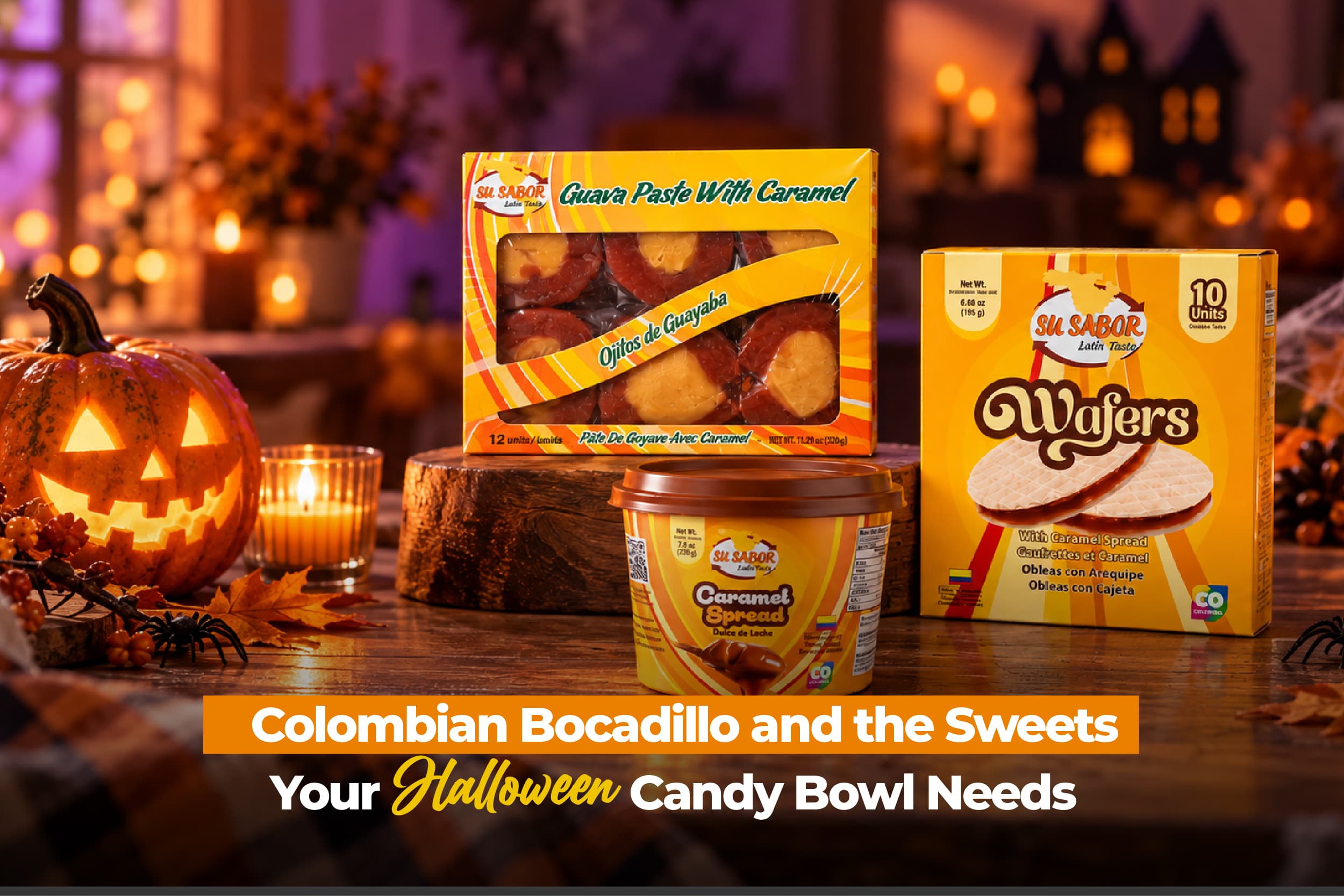
Every October, candy bowls across the United States fill up with the same predictable lineup: chocolate bars, candy corn, gummy everything. But for millions of Latino families, and increasingly for curious food lovers everywhere, the real treat this season is something most Halloween shoppers have never heard of: Colombian bocadillo, a guava paste so good it has been winning over Colombian households for generations, long before candy bowls existed.
At Su Sabor, we believe Halloween is the perfect excuse to introduce your neighborhood, your classroom, or your own kitchen to Colombian sweets. This guide walks you through the most beloved treats in Colombian dessert culture: what they are, how they are enjoyed, and why they deserve a spot in your candy bowl (and honestly, in your pantry year round).
What makes Colombian sweets different
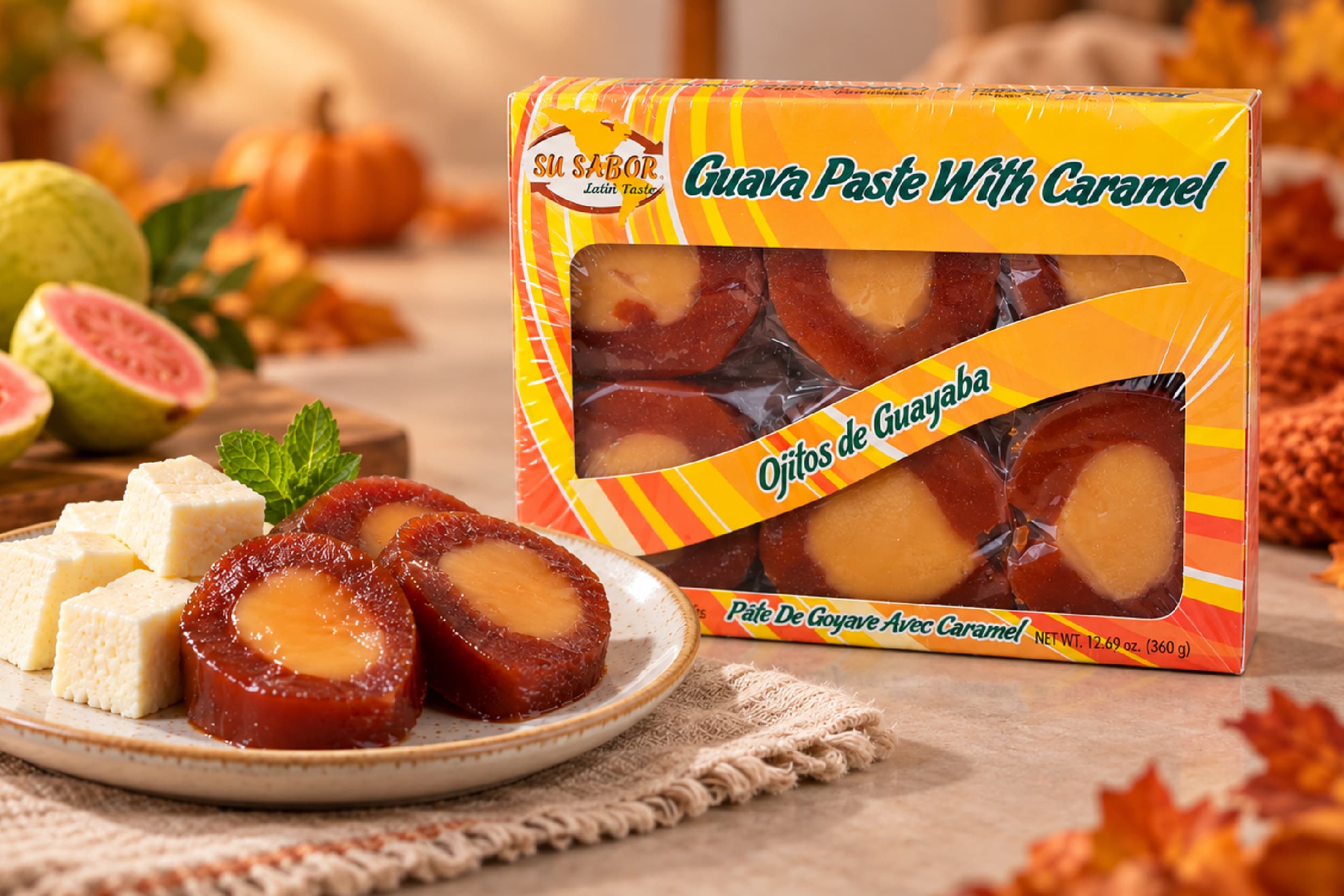
If you have never tried Colombian candy, the first thing to understand is that it is built around a few star ingredients used in surprisingly versatile ways. Colombian bocadillo is a firm, sliceable guava paste, often called guava paste colombian in English-language listings, traditionally associated with the town of Vélez in Santander, which is why many brands label it bocadillo veleño. It is eaten on its own, paired with cheese, or used as a filling in other desserts.
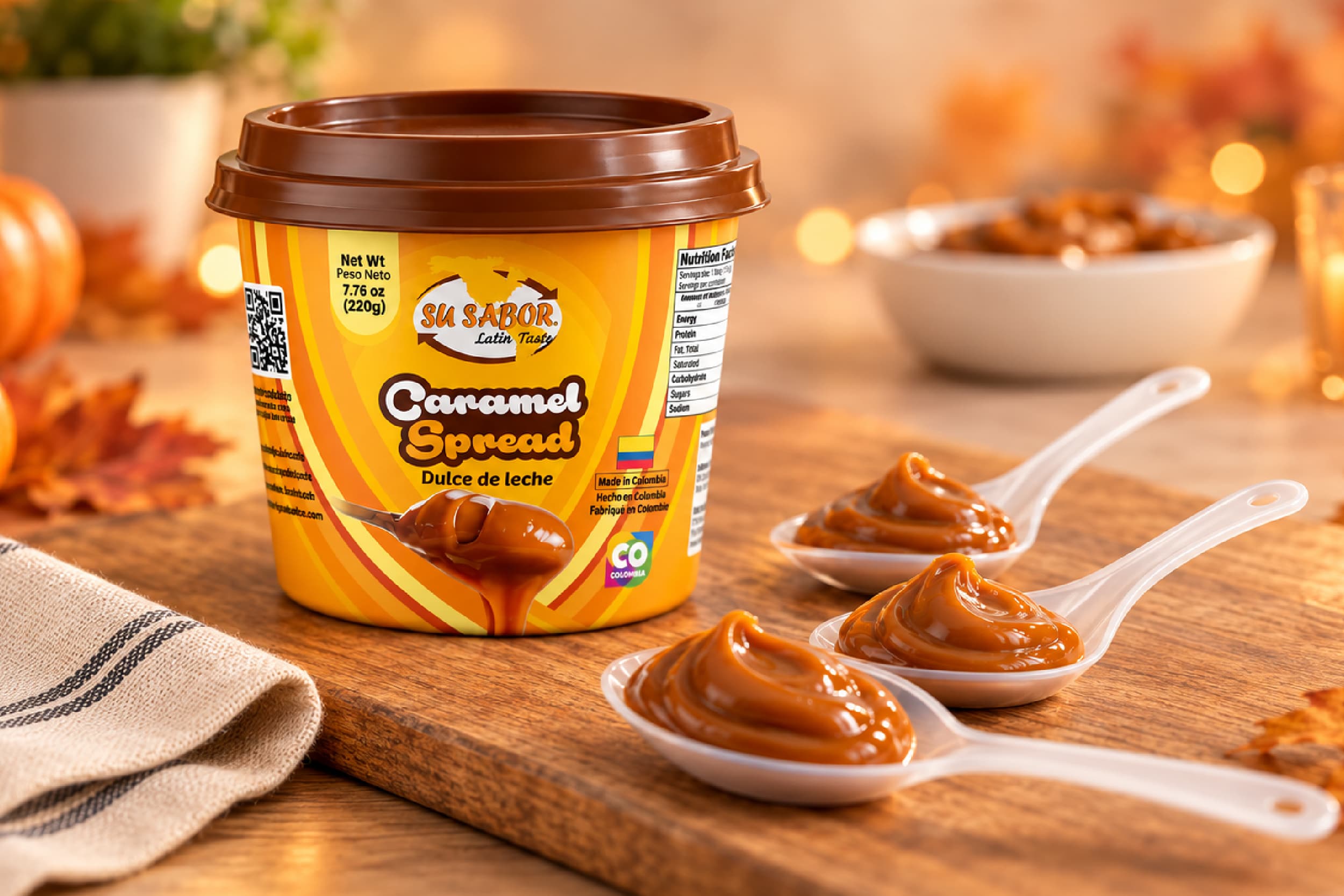
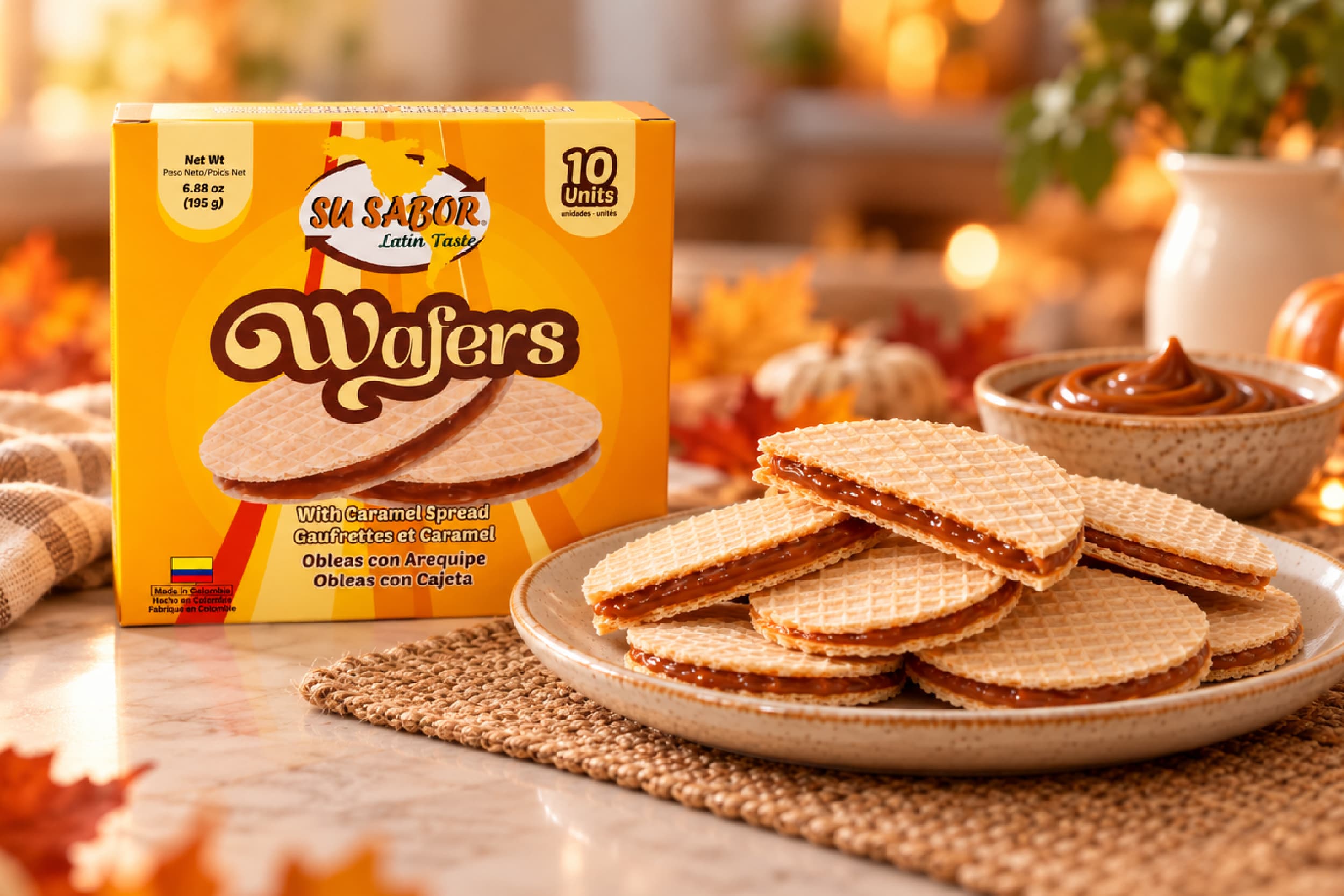
Then there is arequipe, Colombia’s answer to dulce de leche: milk and sugar slow-cooked for hours until it turns into a thick, deeply caramelized spread. And finally, colombian wafers, known locally as obleas, thin crisp discs stacked with arequipe, sweet cream cheese, or fruit preserves into a dessert that looks like a tiny edible tower.
What ties these three treats together is not just flavor, it is memory. For Colombian families living in the US, finding real bocadillo on a store shelf is not just snacking, it is a direct line back home, the kind of small moment that can turn an ordinary afternoon into something that feels, if only briefly, like being back in a Colombian kitchen.
From Colombian markets to your kitchen: the tradition behind the sweet
To understand why these treats carry so much nostalgia, it helps to know where they come from. Bocadillo has deep roots in Vélez, Santander, a region where guava cultivation and handmade bocadillo production have shaped local identity for more than a century. In traditional Colombian markets, you can still find bocadillo wrapped in dried bijao leaves, the original packaging method used long before modern wrapping existed.
Arequipe shares a family resemblance with other Latin American milk caramels, but Colombian households gave it its own personality through slow cooking and small regional touches, a cinnamon stick here, a strip of lime peel there, to balance the sweetness. Obleas, meanwhile, became a street food tradition thanks to vendors in Colombian parks and plazas who turned a simple wafer into an experience, stacking each layer right in front of the customer.
That heritage is exactly what Su Sabor works to preserve. This is not just about selling a sweet product, it is about keeping alive the patient, communal way generations of Colombians learned to enjoy dessert in the first place.
Bocadillo with cheese: the combo that needs no introduction
If one combination captures Colombian dessert culture in a single bite, it is bocadillo with cheese. Slice a piece of guava paste, pair it with a slice of fresh queso fresco or farmer’s cheese, and that is it. No cooking required, no complicated technique, and yet it remains one of the most beloved desserts in the country.
The combination works because it balances two opposite flavors: the concentrated sweetness of guava against the mild saltiness of fresh cheese. It is the same principle behind guava cheesecake or guava and cream cheese pastries, just in its simplest, most honest form.
For a Halloween table with Colombian flair, try threading small bocadillo and cheese cubes onto skewers, dessert-kabob style. It is visually striking, easy to serve a crowd, and a perfect way to introduce someone to one of Colombia’s most iconic flavor pairings for the first time.
Arequipe: Colombia’s caramel, and so much more
It is common to hear that Colombian arequipe is “basically” dulce de leche or caramel, but anyone who has tried all three knows that is not quite true. Arequipe tends to have a thicker texture, a deeper flavor, and depending on the recipe, hints of vanilla or cinnamon that set it apart.
In Colombia, arequipe shows up everywhere: spread on bread, piped into obleas, served alongside cheese, or eaten straight from the jar with a spoon (no judgment here). It is also the base for desserts like manjar blanco and for warm drinks during Colombia’s cooler December nights.
For a quick October treat, spread arequipe over a wafer and top it with a sprinkle of shredded cheese. The contrast of smooth caramel, crisp wafer, and salty cheese is exactly the kind of bite that makes first-timers immediately ask where they can get more.
Colombian wafers: the most photogenic snack in Latin dessert culture
Colombian wafers, or obleas, deserve their own spotlight because they are, without exaggeration, one of the most photogenic desserts in all of Latin cuisine. Their thin, crisp texture contrasts beautifully with creamy fillings like arequipe, sweet cream cheese, or blackberry jam, and the result looks every bit as good as it tastes.
Culturally, obleas are tied to parks and street fairs in Colombia, where vendors build them on the spot, layer by layer, right in front of the customer. You can recreate that same experience at home with a build-your-own-oblea bar, a fun centerpiece for a Halloween gathering where guests pick their own fillings.
For a seasonal twist, add a dash of cinnamon over an arequipe filling, or mix cream cheese with a spoonful of guava jam for a wafer that balances sweet and savory in every bite.
What makes obleas special is not just the flavor combinations, it is the ritual. In Colombian parks, buying an oblea is rarely a solo activity: friends gather around the cart, debate fillings, and often split one giant stacked oblea between two or three people. Bringing that same shared, build-it-together spirit into a Halloween gathering turns dessert into an activity instead of just a course, which is part of why this format tends to be such a hit with kids and adults alike.
How to give your Halloween a Colombian twist
You do not have to replace Halloween traditions, just add a layer that means something to your family. A few practical ideas:
- The Colombian candy bowl: alongside (or instead of) regular candy, hand out individual bocadillo pieces and mini obleas to trick-or-treaters. The “wait, what is this?” reaction is half the fun.
- A dessert table for your costume party: set out bocadillo, arequipe, and obleas next to traditional American candy and let guests compare notes.
- A five-minute movie night snack: a cheese board with cubed bocadillo is a dessert that always surprises first-time guests.
- A late-night craving fix: a quick arequipe wafer is more satisfying, and honestly easier, than hunting down dessert at 11pm.
- A classroom-friendly option: individually wrapped bocadillo pieces travel well and hold up better in a lunchbox or treat bag than anything that melts, which makes them a practical choice for school parties as much as they are a cultural one.
Many parents raising kids between two cultures use Halloween as a quiet teaching moment, a chance to say “this is part of where our family comes from” without turning it into a lecture. A candy bowl is a low-pressure, high-reward way to do that, especially when the reaction from trick-or-treaters is almost always curiosity rather than hesitation.
These treats do not need a special occasion. October is simply one more excuse to rediscover them, and once you do, they tend to become a pantry staple long after the costumes go back in the closet.
Where to find authentic Colombian sweets
At Su Sabor, we make sure you do not have to fly to Colombia, or wait for a care package, to enjoy these flavors. Our bocadillo veleño, arequipe, and Colombian wafers are available through our online store and our Amazon Brand Store, shipped straight to your door.
If you already know your favorite, do not wait for October to end to try it. And if you have never tasted any of these, there is no better time of year to start, since most first orders arrive well before Halloween if placed in the first half of the month.
Frequently Asked Questions
- Does Colombian bocadillo need refrigeration? Not necessarily. Thanks to its sugar content, bocadillo keeps well at room temperature. That said, refrigerating it after opening can extend freshness and improve texture in warmer climates.
- What is the difference between arequipe and dulce de leche? Both start from milk slow-cooked with sugar, but Colombian arequipe is typically cooked longer, resulting in a thicker texture. Many recipes also add hints of vanilla or cinnamon that set it apart from other Latin American milk caramels.
- Do Colombian wafers come pre-filled, or do you assemble them yourself? Both options exist. You can find individually filled, ready-to-eat obleas, as well as packs of plain wafers meant for building your own combination at home, which is actually the more traditional way to enjoy them.
- Is bocadillo with cheese a dessert or an appetizer? Traditionally it is served as a dessert or a sweet snack, but in Colombia it is also common in lunchboxes, family gatherings, and even alongside afternoon coffee.
- Are these Colombian sweets gluten free? Bocadillo, arequipe, and most traditional obleas do not contain gluten in their base recipe, though it is always worth checking the label of the specific product, since some variations may include additional ingredients.
- Can these sweets be used in baking? Absolutely. Arequipe is a classic filling for cakes, brownies, and alfajores. Bocadillo can be gently melted and used as a filling in sweet breads or as a layer in cheesecake-style desserts.
- Where can I buy authentic Colombian sweets in the US? You can find Su Sabor’s bocadillo, arequipe, and Colombian wafers through our online store and our Amazon Brand Store, with shipping across the country.

